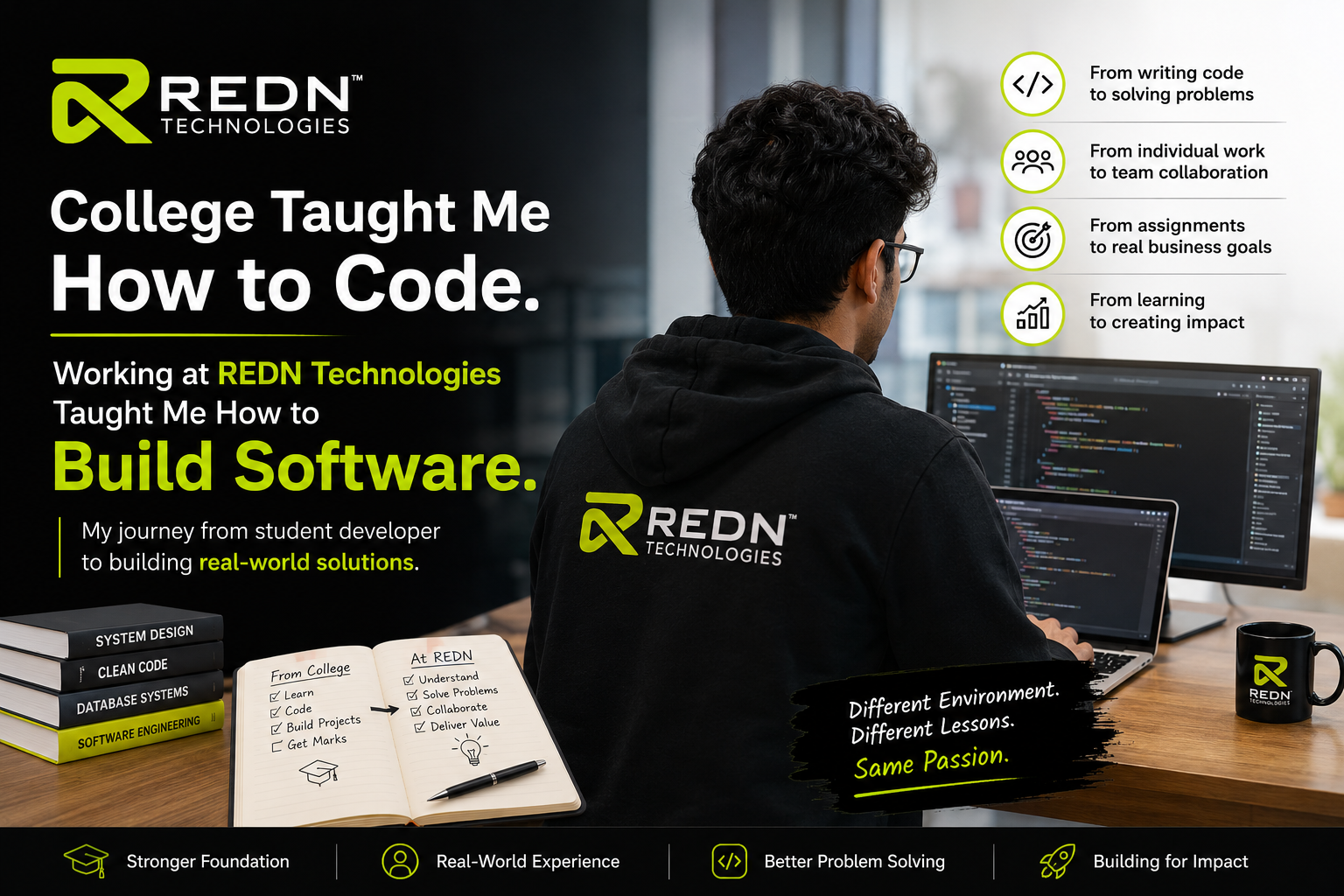

As a Computer Science student, I had built several academic projects, experimented with different technologies, and spent countless hours learning programming concepts. However, building a real-world mobile application was a completely different experience.
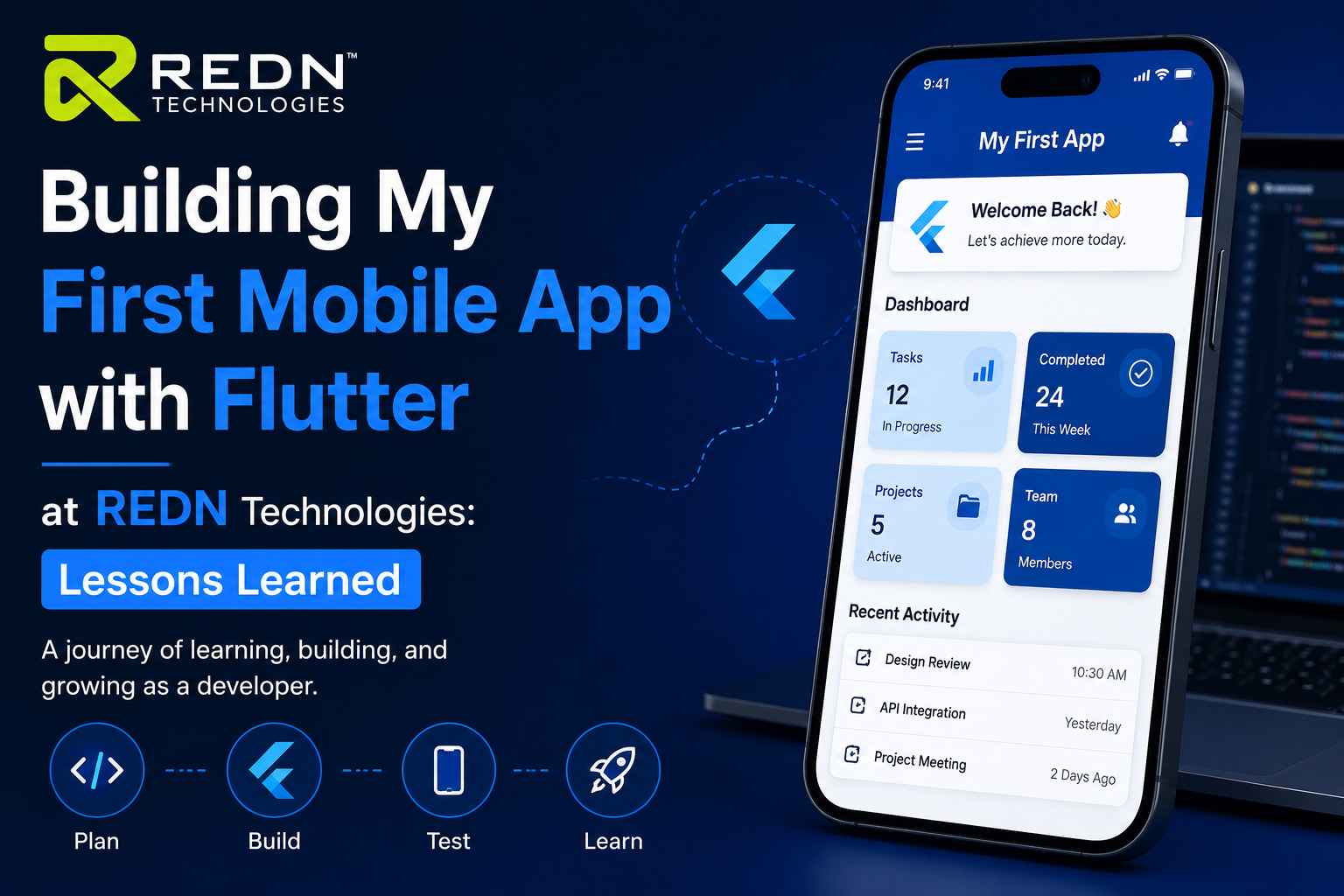
My journey of developing my first mobile app with Flutter at REDN Technologies taught me valuable lessons that went far beyond writing code. It helped me understand how software is planned, developed, tested, and delivered to solve real user problems.
Why Flutter?
When it came to mobile app development, Flutter stood out for several reasons:
Single codebase for Android and iOS
Fast development with Hot Reload
Beautiful and customizable UI
Strong community support
Excellent performance
As a developer, the idea of creating applications for multiple platforms without maintaining separate codebases was both exciting and practical.
From Learning to Building
Learning Flutter through tutorials was relatively straightforward.
Building an actual application was not.
In tutorials, everything is structured and controlled. In a real project, requirements evolve, user expectations change, and unexpected challenges appear regularly.
I quickly realized that building an application isn't just about creating screens and writing business logic. It's about creating a complete experience for the user.
Challenges I Faced
Understanding Application Architecture
One of my biggest learnings was understanding how different parts of an application work together.
Managing screens, navigation, data flow, and application structure required careful planning from the beginning.
A good architecture makes development easier. A poor one creates problems later.
State Management
As the application grew, managing data efficiently became increasingly important.
I learned that proper state management isn't just a technical decision—it's essential for maintaining clean, scalable, and maintainable applications.
Creating Responsive User Interfaces
Users access applications on devices with different screen sizes and resolutions.
Designing interfaces that remain consistent and user-friendly across devices taught me the importance of responsive design and user experience.
Debugging and Problem Solving
No software project is complete without challenges.
Some bugs took minutes to resolve.
Others required hours of investigation.
While frustrating at times, debugging became one of the most valuable learning experiences throughout the project. Every issue helped me understand Flutter and application behavior more deeply.
Lessons Learned
1. Planning Saves Time
Jumping directly into development may feel productive, but spending time understanding requirements and designing the application structure saves significant effort later.
2. User Experience Is Everything
Users rarely care about the technology behind an application.
They care about usability, performance, and whether the application helps them accomplish their goals efficiently.
3. Clean Code Matters
Writing code that is readable, maintainable, and scalable becomes increasingly important as projects grow.
4. Learning Never Stops
Every feature, bug, and challenge introduced something new to learn.
The more I worked on the project, the more I realized how much there is still to explore in software development.
5. Real Projects Build Real Confidence
Tutorials provide knowledge.
Projects provide experience.
Working on an actual mobile application gave me confidence that no course or tutorial could provide.
How REDN Technologies Helped Me Grow
One of the most rewarding aspects of this journey was the opportunity to work in a professional environment at REDN Technologies.
Being part of a team, understanding real project requirements, receiving feedback, and contributing to meaningful solutions helped me develop both technical and professional skills.
The experience taught me that software development is not just about coding—it's about collaboration, problem-solving, and creating value for users.
Final Thoughts
Building my first mobile app project with Flutter was a significant milestone in my journey as a software engineer.
It taught me technical skills, improved my problem-solving abilities, and helped me understand the realities of professional software development.
Most importantly, it showed me that growth happens when you move beyond tutorials and start building real solutions.
If you're learning Flutter or planning to develop your first application, my advice is simple:
Start building.
Your first project may not be perfect, but it will teach you lessons that no tutorial ever can.